Sunday, December 28, 2014

Review: Weed Forager's Handbook

I was very lucky that for my birthday, a most lovely lady friend of mine gifted me with a most marvelous book.

She knows of my proclivity for self-sufficiency and likewise has an eye for it herself. She had been on a series of Edible Weed walks and workshops, run here in urban Melbourne, and thought to buy me the accompanying book:
The Weed Forager's Handbook:
"A Guide to Edible and Medicinal Weeds in Australia"

Full of full colour photos and classically rendered botanical illustrations, this 166 page manual contains detailed edibility and medicinal notes on 20 common weeds, that can be found in my local area, and in most regards, Western urban environments. the book itself is small enough to fit easily in a cargo-pants pocket, and even a back-pocket. Great for those foraging trips around the neighborhood. 

I've made several meals containing greens I have sourced from on or around my home, in the laneway and up and down the nature strip of my quiet suburban street.

As well as the main 20, there are  another 14 short profiles of useful plants. Each of the listings comes with tales from history and folklore regarding the plants, as well as a good introduction to known poisonous plants hat should NOT be harvested.

I knew nettles were edible, but didn't know how to harvest and prepare them, and they are delightful!
Likewise, dandelions and wild lettuce grow around my house, and they have also made it onto the table, in soups and stews, and even as a boost to salads.

This book by Adam Grubb and Annie Raser-Rowland has added to my spread of knowledge with regards putting good food on the table, and even though I might have had to sneak it past the finicky teenager, I like to think that I am adding to the nutritional bounty of our otherwise distant farm and supermarket sourced food.

It also never hurts to know what will make a needful addition to the pot, should the shops be bare and the roads closed!

Wednesday, December 24, 2014

Review: Fenix - E99Ti light


I really enjoy flashlights (torches, they call them here), and if it's not a knife, a pouch or packs that arrives in the mail, its likely to be a torch of some kind. My first Fenix torch was the TK-51, which I got following meeting their CEO and VP at the SSAA SHOT Show. I was fairly devastated when a fortnight or so ago, my car got broken into, and one of the things I lost was the TK-51. I had the majority of my performance lights in the car that night, and was left somewhat in the dark as a result.

Thankfully, I had recently received this little beauty in the mail, having won a competition with Fenix Worldwide. This is their Limited Edition E99 Ti.


The E series is for EDC, where the TK is for Tactical. This light does the job perfectly. At just 6.6cm long, and 1.5cm in diameter, it is only marginally bigger than the AA battery it is powered by. It is machined from two pieces of alpha titanium4 alloy, this unit weighs just 18g (0.6oz) without the battery in it.

It comes with a flatish flanged base, and a lanyard hole drilled into one of the flanges. I quickly added it to my keychain of goodies and it's ridden in my pocket ever since.

4 lumen - low, 3m outdoors
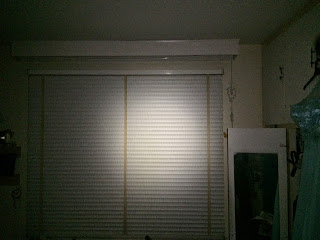
4 lumen - low, 3m room


The Cree XP-E2 LED has a lifespan of 50,000 hours, and the digitally maintained brightness circuit ensures constant brightness. The cool thing with this light is that it has three settings, activated by the screw-to light top of the light. a 1/6th turn of the head is enough to trigger the light, and by selectively turning it on and off again, in a 2-second window, the light steps up from a subdued 4 lumen, to a mild 27 lumen, and up to its maximum 100 lumen output.

27 lumen - medium, 3m room
27 lumen - medium, 3m outdoors


100 lumen - high, 3m outdoors
Capable of standing up securely on a flat surface to serve as a candle, and able to cast to a maximum of 41m, which is not small feat for a single AA light, the E99 offers a 420candlepower maximum intensity. That's a whole lot of light. It comes at a cost though, at maximum brightness, you only get 50 minutes tops, at medium 4 1/4 hours, and somewhere between 28-30 hours at the lowest setting.  The twist-to use and change feature took a little getting used to, but it is stable, and robust.

100 lumen - high, 3m room


 Again, that's still a lot of light for such a small package. It dies get hot after not long on the 100 lumen setting, and a built in drop-down to medium after about 3 minutes is built in, for safety. Drop safe to1m (table height) and water resistant (IPX-8 rated) to 2 m this light will take the bumps and dunks that you might expect to just be able to shake off yourself too. I imagine it would take a fair bit more abuse, but given that it lives in my right front pocket, I will try to avoid testing that too heavily.

Saturday, December 20, 2014

Review: Hummingbird - Mega hammock

Summer has arrived here in Melbourne ( don't let the rain and storms fool you) and I have broken the hammocks out, because in the afternoon and evenings, our house retains the heat and radiates like an oven.

I've covered hammocks before, with the Eagles Nest single hiking hammock, but I found an excellent Kickstarter for a mega hammock, to suit my burgeoning family needs. The good folks at Hummingbird Hammocks pitched a "Mega Hammock" and successfully funded.

The mega hammock is designed to hold three to five people, and is rated to carry 450kg (1000lbs). I like to sling it in my back yard, and have taken it camping (although we didn't find a good place to set it up, so haven't had the pleasure of sleeping in it, in the wild).  It measures 5.5m x 2.4m (18' x 8) and spreads out nicely.

Three distinct panels are sewn together to form the body of the hammock, and Hummingbird are proud to say that they use construction techniques borrowed from the Parachute Industry Association, and materials that are likewise parachute grade.

Their mega hammock is made out of 1.9oz polyurethane coated ripstop nylon, which is incredibly strong (rated at about 100lbs per square inch.) The edges of the hammock have type 17 nylon webbing sewn in and used for the attachment points to the four corners. This webbing is rated for 1100kg (2500lbs), will not stretch, and is low bulk. The fabric has a lot of give, and the edge seams and the three panel seams are sewn such that you get uniform "give" throughout.

All the stitching is done on an industrial sewing machine using size 69 bonded nylon thread, which along with everything else used to make the hammocks is very strong and is the very same thread used on parachutes.

They offer several different colours, but I jumped at the coyote-brown option, whcih also goes some way to cover up any goopy-hands stains that my minions may present.

In additiontothe webbing loops in the corners, Hummingbird supply soft link attachments instead of traditional carabiners. These are apparently used widely in skydiving today as a means of connecting the parachute lines to the jumper. They contain no hard parts, are stronger than a carabiner of similar size, weigh next to nothing, and are impossible to cross load.

A simple length of high strength cord, with a loop at either end, one end having a tab of webbing sewn in.  You loop it through itself twice, and you have a light, secure and bomb-proof anchor connector. I have lengths of 2" webbing that I use as my attachment to the steel beams, concrete pillars and roofing beams that I sling mine off. I figure the 5500lbs breaking load the webbing means I don't have to worry where I sling this. Perfect for the rafters of an abandoned warehouse, or between Ewok trees.

The hammock comes with its own stuff-sack, and packs down into a small-pillow or sleeping bag sized bundle. It was quite an investment, but thus far, if nothing but the joy of my littles ones is a measure, it's been fully worth it. Having a portable, hardy betting option is nothing to be sniffed at either, and there are many situations where I would want to bunk-down well off ground level.

Especially if I need to watch out for stobor.

The Hummingbird Mega hammock certainly is big, and quite comfortable with a number of people in it. Be sure to sling it high enough to be off the ground when loaded up, but not so high as to be impossible to get in or out comfortably.


Thursday, December 18, 2014

Home Front: summer garden 2014

As with previous years, I planted a vegetable garden over the winter-spring cusp, in order to have a good summer crop of greens.

Using wood I reclaimed from pallets that had been left on the road-side by a neighbor who was having some renovations done, I built this box in an afternoon, dug post holes, dropped it in place and left it lay-fallow with weed-suppressing cardboard boxes lining the base. I then filled the box 3/4 the way up with a mulch/soil mix that I had purchased (and got a water-saving rebate for), and hit our local garden/hardware store for seedlings.

In previous years I have planted in our low-sided veggie patches, but this year, as a result of my lovely partner Omega's request for a raised bed, to give better access to our crops without the need for bending and kneeling, which is one reason I built a hip-high box.

These little guys are the other reason. We now have four Flemish Giant rabbits. They started off palm sized, and will eventually get to be 10 kg (22 lb) each. I have now made two wired-off enclosures for them to run in, but we found they could both climb, and hop into the raised bed. Hence the "over the top" chicken wire over the bed, and the over-hanging lip to make a more effective perimeter fence.

A lucky finding was that the rabbits didn't like the artichoke plant that we had regrow this year from last years failed attempt. We've managed several meals worth of artichokes and Tactical Baby enjoys selecting which "dinosaur flowers" we are going to have. There are also several onion plants in there, also segregated from the bunnies, and it looks like we might have some invincible potato plants coming up as well.

I lined the side of the raised bed with a strip of copper tape, which has proven to be an effective slug and snail deterrent. We did have a cabbage moth caterpillar problem, which was attacking the broccoli, cauliflower and cabbage plants we planted, but the invading bunnies ate all the buds from them anyway, so we lost those crops.

What we do have going however is two kinds of kale, spinach,  Vietnamese mint and coriander, tomato and spring onions. We also have several eggplants on the go in there.

Its a very high density plot, and it takes some rummaging to get from one plant to another, but being hip-high has been a great improvement.

My other partner Lorin has been admonishing me for planting the tomatoes in there, and not separately, because of how big they've gotten, but I'm a sucker for high density, bountiful and bodacious harvests, and that covers my gardening too!

We might even give the vertical garden another go, although we've left it a bit late in the season. Between the two extra rain barrels we put in, and the unfortunate reduction in our number of chookens (lost 7 overnight, some kind of illness, down to one, the unkillable Princess Layer, veteran of four previous calamities) we might even make more use of the back yard this summer. 


Sunday, December 14, 2014

Movies: These Final Hours, Aftermath

 It's getting to be holiday season, so I thought I'd tempt you with a couple of films to set your moods. Its going to be a hot, dry and probably burning summer here in Australia. We're all waiting for the next installment in the Mad Max franchise, which I can tell you, was pretty formative for me, even the Mad Duo see the effect it's had on me.

I've always enjoyed disaster flicks, for both situation suggestions, but also for the "no, NO you idiot, take that, leave those, get out of there, CLOSE THE DOOR" moments that I can share with my friends. Its even better when the movies are more "Everybody Smith" than "Master Sergeant Squarejaw", because I can relate more, myself.  It goes doubly so when the setting is one I recognize and relate to: I was thrilled by 28 Days Later far more than by Armageddon .

So, here are two trailers I saw not too long ago, for movies I hope to watch on my days off as I'm canning supplies and sharpening my Tomahook.

These Final Hours (2014)

It's the last day on earth, twelve hours before a cataclysmic event will end life as we know it. James makes his way across a lawless and chaotic city to the party to end all parties. Along the way, he somewhat reluctantly saves the life of a little girl named Rose who is desperately searching for her father. Stuck with the unexpected burden of responsibility, James is forced to come to terms with what really matters in life as the final hours tick away.


Aftermath (2014)

The devastating horror of a nuclear apocalypse is now reality and nine desperate strangers find themselves clinging to life in a farmhouse cellar, while radioactive fallout descends on the darkened world above. These would-be survivors face the nightmare of dwindling supplies, poisonous air and the greatest threat of all - the hordes of zombie-like refugees who want in. With each dying day, their choice becomes clearer - stay and let the makeshift shelter become their tomb or face the unknown terrors of the world outside.

Thursday, December 11, 2014

Review: 15L Dry Bag


Whether you're stuck on the side of a hill in monsoon season or you're kayaking to your bug-out shack, it pays to have a means of keeping your kit dry and safe. When I first got my Aquayak kayak, I saw these, and thought that I should add them into my collection at some stage.

Made from 70D nylon fabric with reinforced and sealed seems,  drybags like these are also treated to 7000mm waterproofness rating. 7m is a lot of depth for a bag, but a deep rating is better than a shallow one!

Attachment loops at the top which tie in to the sealing system give you hanging points, if not a carry system.


One of the key things about these kinds of bags is the closure system. With a seam of webbing along the lip, and a fastex style clip at either end, the bag is sealed by tightly wrapping the lip over and over itself, then clasping the clips together, it locks itself in tight.

The seal it produces is very tight, and gives the bag a near airtight seal. It is in fact so airtight that you need to take that into account when loading it up and sealing it up.

If you don't squeeze all the air out of the bag first, you get an inflated and buoyant bag. Emptied of air and you can get a dense, compacted and watertight storage unit.

I managed to fit several of my Platatac Half-fleece jumpers and a blanket in this one, and have had no trouble filling it with a number other items. The smallish circumference makes it for easy stowage, either in my kayak, slung under a pack or in the boot of the car.

Either way, its a very good way of keeping valuables high and dry.

Thursday, December 4, 2014

Events: Three years. 430 articles, 472,000 views.

Here we are at the end of 2014. Next year we can expect Marty McFly to ride his hoverboard, and the Events of Neon Genesis Evangelion are to begin. Good times.

Where it all started!

Two year review!

400 posts shout-out

This has been a busy year, I've not managed to post as often as I'd like, due to work and home commitment, but I've been delighted with the responses I've had, both in regular readership, new readers and whole new frontiers.


I'm thrilled to have been taken up as a writer for both BreachBangClear and RecoilWeb, as well as keeping in touch with the folks at Zombease and my fellow Z.E.R.T members.


I like to think my writing style has matured, and my skill levels have increased, both in my survival and preparatory skill sets, but also in my reviewing and planning skill sets. I also seem to be almost singlehandedly keeping the Kickstarter community funded, and gladly.

Thanks to all of you; good prepping, be equipped and ready for anything!
Related Posts Plugin for WordPress, Blogger...